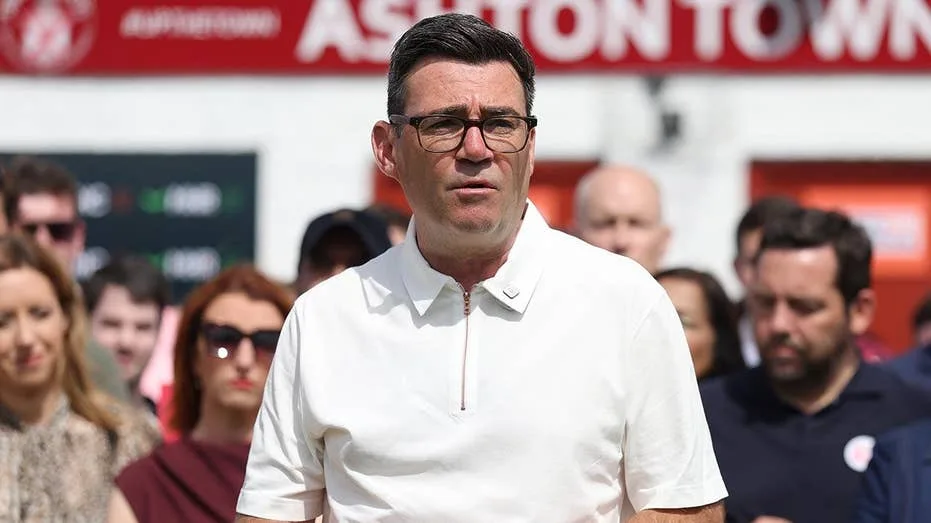
United Kingdom Prime Minister Andy Burnham is advocating for a reevaluation of England’s regulations concerning alcohol at men’s football matches, characterizing the existing ban as a form of “discrimination.” He has suggested that a trial period could be used to test potential changes to these rules.
Addressing members of the press, Mr. Burnham stated, “I don’t think it’s fair for football fans to be singled out.” He emphasized that these supporters are subjected to restrictions not imposed on attendees of other athletic events.
Under the current legal framework, fans are barred from consuming alcoholic beverages within sight of the pitch at stadiums hosting clubs in England’s top five tiers of men’s professional football. These same prohibitions do not extend to other sports.
Historical Context and Calls for Review
The Football Supporters’ Association (FSA), which represents football fans across England and Wales, has urged for a review of what it describes as “outdated” legislation. Conversely, police leaders have cautioned against any relaxation of the law, expressing a desire to engage with Prime Minister Burnham to “explain the challenges” that could arise.
The legislation itself was enacted in 1985 by Margaret Thatcher’s government, specifically targeting football grounds within England and Wales. At the time, then-Home Secretary Leon Brittan asserted that alcohol was a “major contributory factor in violent and disorderly behavior” observed at these venues.
Prime Minister's Personal Stance
Mr. Burnham’s connection to the sport is deeply personal; he is a fervent football enthusiast and a season-ticket holder for the Premier League club Everton.
Before assuming his role as the leader of the UK government, Mr. Burnham had already voiced his opposition to restrictions placed on football fans. He notably made these remarks while attending a rugby league match at Everton’s Hill Dickinson Stadium, where, unlike during men’s football games, spectators were permitted to drink alcohol in the stands.
During a visit to New York City for the United Nations General Assembly, the Prime Minister was questioned about whether his perspective had shifted now that he occupied Downing Street. He responded, “I think that legislation dates to an era where football was very different.”
“And I do believe there is a case to remove that discrimination. There are different ways it could be done. It could happen on a trial basis. But I'm not going to back away from what's been a long held view of mine. I don't see how it can be fair that some supporters of one sport can be treated differently.”
Sources within the government informed the BBC that Mr. Burnham was reiterating a long-held personal belief rather than announcing a new official government policy. However, these comments are reportedly not being interpreted within government circles as an indication that Mr. Burnham intends to initiate a change in the law.
Diverging Views: Policing and Supporters
A spokesperson for the U.K. Football Policing Unit issued a warning that altering the existing law could introduce new difficulties for law enforcement and trigger concerns regarding the “safety of staff and fans at football games.”
The spokesperson elaborated: “Other sports simply don't see the violence and criminal behavior from their supporters that football does, albeit a minority, with alcohol often playing a significant part in violent and disorderly behavior.”
Tom Greatrex, chairman of the FSA, contested this argument, stating it was “unfair to criminalize football fans for having a pint while watching the match, especially since you can sit in the same seat drinking alcohol (while) watching an Oasis gig or rugby league.”
Precedent in Women's Football
Notably, England has adopted a distinct approach within the Women’s Super League (WSL). Following two successful trial campaigns, all clubs in the WSL are now permitted to serve alcohol in the stands for the current season.