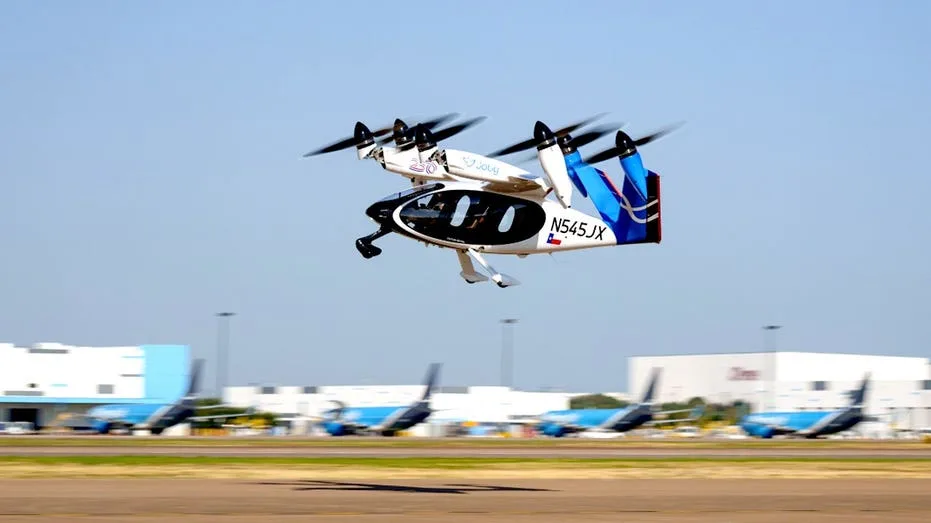
The vision of flying over congested roadways may soon become a reality, with Texas actively exploring the potential of advanced air mobility. Earlier this month, the Texas Department of Transportation (TxDOT) commenced Project Nexus, a comprehensive three-year initiative designed to integrate next-generation aircraft into the state's skies.
The program's launch event on September 10 at Perot Field Fort Worth Alliance Airport featured demonstrations from aviation innovators BETA Technologies and Joby Aviation. Joby showcased its electric vertical takeoff and landing aircraft, commonly known as an eVTOL. While no passengers were on board these initial Project Nexus flights, the endeavor marks a crucial step for Texas in understanding how air taxis could eventually become a part of future transportation networks.
Advancing Through Phased Testing
Project Nexus is structured to progress through several phases over the next three years. The initial phase utilizes conventional aircraft, including helicopters and fixed-wing planes, to conduct route testing and gather essential data. TxDOT indicates that these early flights will be instrumental in validating potential routes and laying the groundwork for future advanced air mobility operations.
As part of this federal eVTOL Integration Pilot Program, Joby also undertook a week-long series of piloted electric air taxi flights across North Texas under the Project Nexus framework. This campaign included scheduled direct flights into DFW International Airport, a round trip to Arlington, and a route connecting Alliance Airport with Toyota Motor North America's headquarters in Plano. A particularly significant test involved DFW, where Joby's aircraft performed a direct flight into the airport's controlled airspace, landing at DFW Corporate Aviation. This operation demonstrated an eVTOL's ability to navigate the busy airspace of one of the world's most active airports, providing regulators with vital insights into how these aircraft might function around major transportation hubs.
Electric vertical takeoff and landing aircraft, or eVTOLs, are designed to ascend vertically similar to a helicopter before transitioning to forward flight using wings. The industry has seen considerable development, with federal pilot programs aiming to introduce air taxis into U.S. airspace prior to full commercial service. Previous discussions have also covered proposals for air taxi services connecting New York City's three primary airports and Joby's collaboration with Virgin Atlantic to establish electric air taxi operations in the United Kingdom. While the aircraft technology itself is evolving rapidly, the current focus is increasingly on the practical aspects of their deployment and how regulatory bodies are evaluating their capacity to operate safely within existing airport infrastructure. This is where initiatives like Project Nexus play a critical role.
Navigating Complex Airspace and Establishing Presence
Operating flights within the Dallas-Fort Worth metropolitan area presents unique complexities that differ from isolated test environments. Joby's campaign included planned missions between Perot Field Fort Worth Alliance Airport and various regional destinations, including DFW International Airport. Both the company and federal researchers have spent years preparing for such operations. Joby notes that the Federal Aviation Administration (FAA) and NASA initiated studies on electric air taxi integration in North Texas back in 2018. More recently, in 2023, Joby collaborated with NASA on a detailed simulation to assess whether the DFW terminal area could manage up to 50 electric air taxi operations per hour. This theoretical work is now translating into real-world aircraft operations across North Texas. Furthermore, Joby has secured a 45,000-square-foot facility at Perot Field Fort Worth Alliance Airport, signifying a long-term operational commitment to the region beyond this initial flight campaign.
Beyond Commuting: Medical and Cargo Logistics
The Texas plan also highlights a particularly compelling aspect: while air taxis often capture public imagination through the idea of skipping traffic, some early Project Nexus missions may not be directly related to personal commutes. Subsequent phases are projected to concentrate on medical and cargo logistics. TxDOT specifically identifies the potential for transporting critical medical supplies or organs between rural healthcare facilities and major urban medical centers in cities like Austin and San Antonio. This application offers a clear and immediate demonstration of the technology's practical value in time-sensitive situations, even as passenger operations continue to develop.
The Path to Passenger Service
Ultimately, Project Nexus aims to incorporate passengers into its flights. TxDOT's final phase envisions regional air taxi connections for passengers across the Texas Triangle, linking major cities such as Dallas, Austin, San Antonio, and Houston. However, this does not imply a definitive launch date for commercial passenger service across Texas. Joby still has significant certification milestones to achieve. The company has progressed to the fifth and final stage of FAA type certification, with testing continuing as part of this rigorous process. Therefore, it is unlikely that an air taxi option will appear alongside conventional rideshare services in the immediate future. The ongoing work is focused on ensuring these aircraft can operate safely and reliably before passenger services are broadly expanded.
A Broader National Initiative
While Texas is currently a focal point, Project Nexus is part of a larger federal initiative. The eVTOL Integration Pilot Program encompasses eight projects spread across 26 states, with testing efforts concentrated on passenger travel, cargo transport, and medical logistics. Previous developments include the FAA's testing of Elroy Air's pilotless hybrid-electric Chaparral cargo aircraft and BETA Technologies' collaboration with United Therapeutics on electric aircraft for organ transport between Virginia and Maryland. Other projects are underway in New York, New Jersey, Florida, and several other states. This widespread testing indicates that while Texas is a significant hub for air taxi development, it is one of many locations contributing to this emerging field. The expanding nature of these trials raises a pertinent question: how long before these innovative aircraft become a common sight closer to home?
Addressing Key Challenges for Public Adoption
Should air taxis eventually arrive in your community, fundamental questions will arise regarding their practical utility. The prospect of bypassing traffic is appealing, particularly for airport travel or navigating dense urban areas. However, the true convenience will depend on factors such as the accessibility of takeoff and landing sites, the cost of a ride, and the actual time savings achieved from door-to-door. Public perception will also be influenced by the noise levels of frequent overhead flights. While electric aircraft are designed to be quieter than traditional helicopters, there is a distinct difference between occasional sightings and regular operations near residential areas. Crucially, before any widespread adoption, the FAA must be fully confident in the safety protocols. This underscores the importance of the Texas tests, which provide regulators with vital real-world data on how these aircraft perform within busy airspace before passenger flights become more prevalent. These trials are essential for determining if air taxis can seamlessly integrate into existing travel patterns.
These aircraft can fly. What I want to see now is whether they can save you enough time, at a price you can live with, to make you actually want to book one.