New York Reparations Commission Faces Extended Deadline, Activists Skeptical of Compensation
A state commission tasked with examining New York's historical ties to slavery and recommending reparations has seen its deadline pushed back, drawing criticism from racial justice advocates and skepticism from lineage-based groups.
Media·
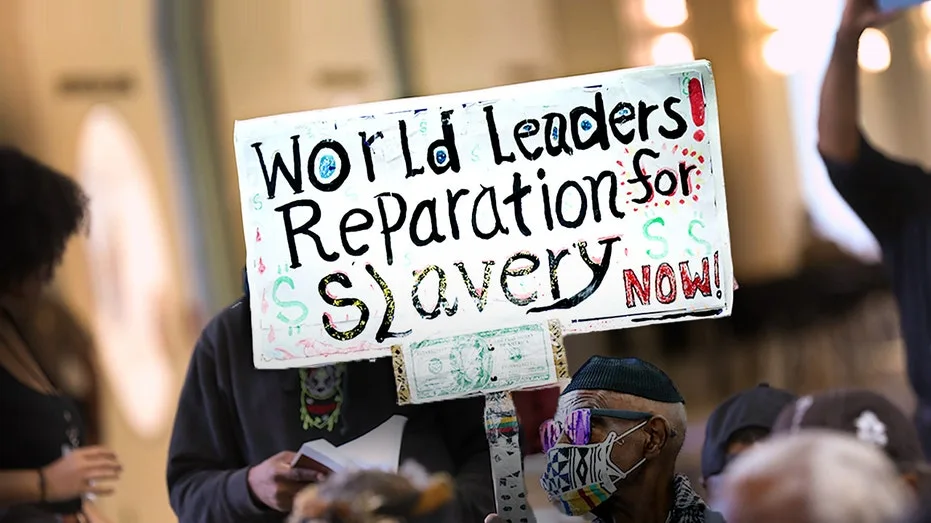
The U.S. Freedmen Project, an organization identifying as representing "Foundational Black Americans," works to inform the public about the unique legal and historical position of African Americans whose ancestors were enslaved in the United States, distinguishing them from more recent immigrants of African or Caribbean descent.
This perspective arises amid significant criticism following state officials' decision to prolong the reporting period for the New York State Community Commission on Reparations Remedies. A measure included in the recently enacted state budget moved the commission's final report deadline from 2027 to 2029, a nearly four-year deferral from its initial 2025 target.
New York's Reparations Timeline Extended
In June, the New York Civil Liberties Union (NYCLU) issued a public statement condemning the postponement.
"The state’s decision to spend an additional three years before it takes any action to address these harms raises a lot of questions about when Black New Yorkers will receive reparations," said Chantelle Williams, assistant director of the NYCLU’s Racial Justice Center.
"Meanwhile, the impact of discrimination continues to harm Black individuals and communities across the state. This delay is not just a bureaucratic inconvenience. It is a disservice to those who have suffered the profound and lasting consequences of inequality," Williams added.
Comprising nine members, the state commission was established through legislation signed by Democratic Governor Kathy Hochul in late 2023. Its mandate includes investigating New York's historical links to slavery, discriminatory practices from the Jim Crow era, and economic inequities such as redlining. The panel's responsibilities also involve formulating recommendations for potential state-level financial reparations and policy adjustments.
A series of public forums held across the state recently concluded, with the final session taking place on May 30 in Harlem, under the title "From Extraction to Repair: Closing the Racial Wealth Gap."
Despite these proceedings, state legislators chose to push back the commission's deadline. Assemblymember Michaelle C. Solages, a Democrat from New York and the primary sponsor of the initial legislation, indicated that the extension was sought to contend with an evolving national legal landscape. Solages specifically pointed to conservative legal actions challenging diversity, equity, and inclusion (DEI) programs and a broader trend of diminishing race-conscious policies.
Additionally, the budget provision incorporated a clause designed to protect commissioners from individual legal responsibility in the event of lawsuits stemming from their eventual conclusions.
Lineage Advocates Push for Strict Criteria
Representatives from the U.S. Freedmen Project, who were present at the Harlem hearing, voiced strong opposition to both the extended timeline and the foundational structure of the commission. They advocate that any reparations should be exclusively allocated to direct descendants of those enslaved within the United States, rather than encompassing broader classifications based solely on race.
Activists associated with the group assert that progressive entities, such as the NYCLU, do not adequately address the specific legal and historical entitlements of descendant Black Americans when they seek to include recent Black immigrants within the same reparative framework.
Prince contended that the individuals appointed to New York's commission were selected more to maintain existing conditions than to achieve meaningful outcomes.
“These are individuals that have been put in place to keep the status quo intact while pretending they're working to undo it," Prince remarked. He added, "There's a bunch of things moving around in the background that tie them to this ideology that benefits them if we keep the status quo of race-based advocacy alive.”
He further clarified the group's objective:
"What we are focused on is true repair — and, unfortunately, true repair means repairing those who were truly harmed. Not everyone who comes in and says, 'Hey, I'm included in that, too.'"
Those who support the Freedmen Project's stance assert that any state reparations legislation founded on race rather than direct ancestry would infringe upon the Equal Protection Clause of the U.S. Constitution. They have implored state authorities to implement stringent lineage-based criteria to minimize the program's vulnerability to legal objections.
Skepticism Over Compensation
New York's initiative is part of a wider trend among progressive states and local governments exploring localized reparative justice models. For instance, Evanston, Illinois, a suburb of Chicago, gained national attention as the first U.S. city to disburse reparations, providing $25,000 housing grants to qualifying Black residents.
Despite the completion of public hearings and continuing research efforts, Prince voiced profound doubt that New York state would ultimately provide financial compensation to descendants.
“Realistically, I'm expecting the same thing that I expected going into this: nothing,” Prince stated. He elaborated, “Based on all the advocacy we did before this was even signed into law — all the recommendations we suggested and experts we brought to the New York Legislature to inform them on how to get this right — once all those things were ignored, I knew it would end up right where it is now. Realistically, I'm expecting them to find a way to distance themselves from this.”
Related Stories
“The View” Co-Host Ana Navarro Draws Scrutiny for On-Air Political Endorsement in Florida Race
Ana Navarro, a co-host on a popular morning talk program, recently garnered criticism for explicitly encouraging viewers to support a Democratic candidate in Florida's 27th congressional district. Her comments have led
Sep 29
Michigan Senate Candidate Abdul El-Sayed Wants Bill Maher to Get 'A-- Whooped' on His Show
Michigan Democratic Senate candidate Abdul El-Sayed stated he would appear on Bill Maher's show to witness him "get his a-- whooped" by a Muslim and engage with Maher's audience. Maher later extended an invitation,
Sep 29

Democratic Donors Reportedly Hesitant to Commit Funds Despite Perceived Opportunities for Party
Discussions among political commentators suggest some significant Democratic donors are reluctant to fully commit funds. Reasons cited include past electoral losses, fear of targeting, and concerns about the party's
Sep 28
Kathy Griffin Urges Ed Sheeran to Defy Robert Kraft Over Macklemore's Palestine Stance
Comedian Kathy Griffin asserted that Ed Sheeran should have stood by Macklemore after the rapper was barred from performing for advocating for Palestine. Griffin contended Sheeran had options beyond complying with venue
Sep 27