The Miami Hurricanes have once again demonstrated a remarkable ability to secure top-tier quarterback talent, defying expectations and frustrating rival fanbases. This recurring pattern of attracting high-caliber signal-callers, often late in the transfer portal cycle, has become a defining characteristic of the program's strategy.
A Recurring Pattern of Elite Talent Acquisition
The trend became notably apparent on January 13, 2024. As collegiate football fans, particularly those from Florida's "Big 3" schools (Miami, Florida, and Florida State), were discussing transfer portal developments, news broke that former Washington State quarterback Cam Ward was committing to Miami. This acquisition came at a time when many rivals believed the Hurricanes had missed out on their primary quarterback targets.
Ward's subsequent 2024 season was described as Heisman-level, but his tenure in Coral Gables lasted only a single year before he declared for the NFL Draft. This departure again left Miami's quarterback situation uncertain, leading to renewed speculation among competitors that the Hurricanes would struggle to find a suitable replacement. However, the program once more surprised observers by securing Carson Beck, a quarterback who had initially declared for the NFL Draft, as a late transfer pickup.
Beck's arrival proved pivotal, as he guided the Hurricanes to within a quarter of potentially winning the national championship. This sequence of events—losing an elite quarterback but quickly replacing him with another high-profile talent—set a precedent for the program under coach Mario Cristobal.
Mensah's Immediate Impact and Future Outlook
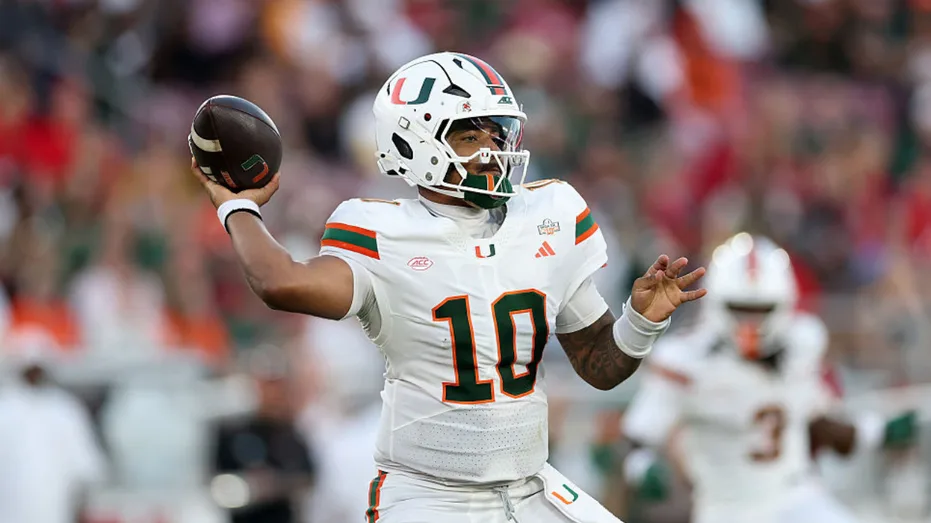
When the Hurricanes again found themselves without a solidified starting quarterback heading into a crucial offseason period, seasoned observers were cautious about making premature judgments. Their prudence was justified, as Miami successfully persuaded another NFL Draft hopeful, Duke transfer Darian Mensah, to join the team in South Florida. Mensah reportedly received significant compensation to facilitate his move.
Although only one game into his tenure, Mensah's initial performance suggests that the investment is already yielding substantial returns. In his debut against a Stanford team that was reportedly missing a significant portion of its roster due to injury, Mensah's statistics were impressive. He delivered throws described as NFL-level and efficiently distributed the ball to various playmakers, most notably wide receiver Malachi Toney. These numbers would be noteworthy in any collegiate contest, let alone a conference road game across multiple time zones.
The consistent ability of coach Cristobal and the Hurricanes to identify and attract quarterbacks with Heisman Trophy potential, capable of leading deep Playoff runs, continues to mystify many in college football. The repeated success in securing such high-profile talent has left many questioning how the program consistently achieves these late-stage acquisitions.
Looking ahead, Miami's schedule appears to present fewer formidable challenges, with a higher proportion of teams comparable to Stanford than those considered Playoff contenders. This favorable schedule, combined with Mensah's demonstrated skill, the abundance of offensive weapons at his disposal, and the strategic guidance of elite offensive coordinator Shannon Dawson, positions the Hurricanes for a potentially dominant season.
For rival fanbases anticipating Miami's struggles, a word of caution is warranted. Should the offseason arrive next January and the Hurricanes' quarterback situation appears unsettled, it would be wise to refrain from prematurely celebrating. Experience suggests that Miami is likely just a few strategic conversations away from securing another potential first-round talent looking for a final collegiate season.