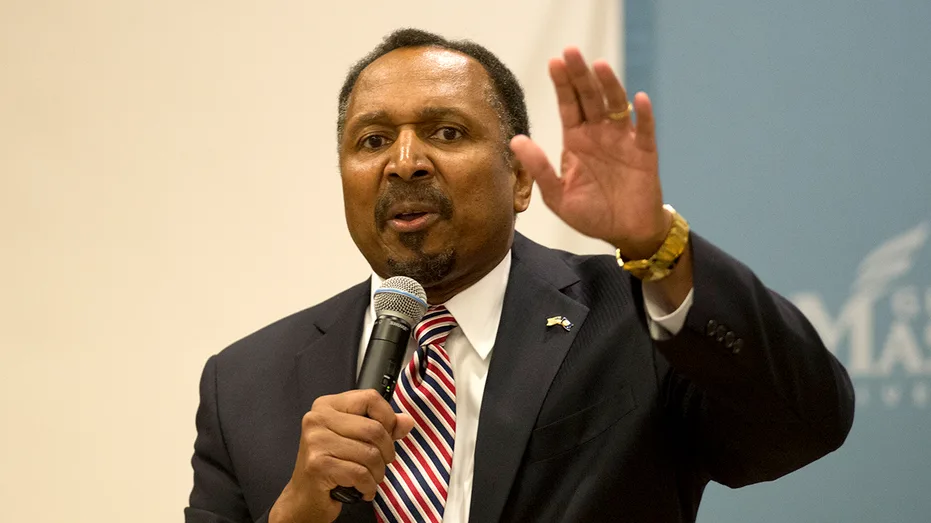
Bishop and author Earl Walker Jackson has voiced sharp criticism against what he characterizes as the 'deeply insulting' and 'deeply offensive' assertion from some Democrats and left-leaning groups that minority citizens, particularly African Americans, encounter significant obstacles in acquiring identification for voting purposes.
The discussion around voter identification mandates intensified recently following a report indicating that over 30,000 individuals who identified as noncitizens were 'erroneously' added to voter rolls in 11 states. Jackson, a nondenominational Christian leader with enslaved ancestors, stated that these findings highlight what he perceives as a growing issue of noncitizen voting, which he believes undermines the voting rights of American citizens.
This is nothing but a power grab. Every vote by a noncitizen does in fact cancel out the vote of an American citizen, or it amplifies it in a way that's illegal or inappropriate.
Concerns Over Voter Roll Integrity
The report, published on Wednesday, detailed that more than 30,000 self-identified noncitizens have been placed on U.S. voter lists since the year 2000. The publication attributed these incorrect registrations primarily to 'software glitches and clerical errors,' suggesting that the issues stemmed from 'inadvertent bureaucratic failures, rather than organized efforts to register immigrants illegally.' However, the report also noted that it was unable to ascertain the precise number of noncitizens who actually cast ballots.
The states where these errors were identified include California, Illinois, Iowa, Nevada, Ohio, Oregon, Pennsylvania, South Dakota, Texas, Utah, and Virginia.
Jackson suggested that the reported figure might be an undercount. He explained that these identified noncitizens were typically discovered through mistakes made by driver's license agencies. He posited that the actual number could be higher because many states have either not conducted comprehensive audits or are not utilizing adequate tools to detect noncitizens who may have been mistakenly registered.
He emphasized that a more rigorous approach is needed to establish a system for verifying citizenship, a standard he believes is lacking in most states. He advocated for stringent verification processes during voter registration, particularly at driver's license agencies. This, he argued, should mirror the requirements for obtaining a driver's license or identification card, where proof of identity and citizenship is mandatory.
If they're going to do voter registration, they need to make sure that there's a verification in place for identity and for citizenship, just as if you come into an agency and you're getting a driver's license or identification card, you've got to show that I.D., you've got to make sure that your identity is confirmed, similarly, if you're going to register someone to vote at the driver's license agency, there needs to be a verification process or a documentation process to ensure that you are a citizen.
Jackson expressed skepticism regarding claims that noncitizen voting is not a significant issue.